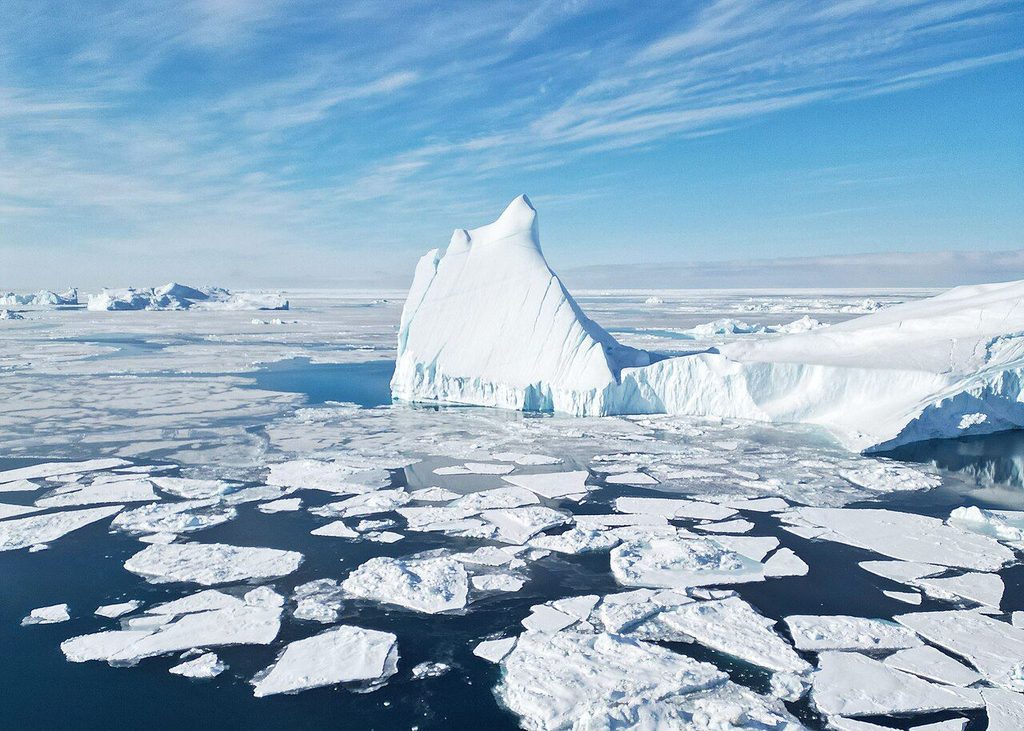
One of the most productive glaciers in the northern hemisphere empties into a fjord at the edge of a small town. You can walk to its shore in half an hour.
| Daylight | Midnight sun from late May to late July; polar night through much of December. |
|---|---|
| Best months | June to September, March |
| Getting there | Flights to Ilulissat, then walk south |
| Bring | Windproof layers, hat, gloves, sunglasses, sturdy shoes |
South of the town of Ilulissat, on the west coast of Greenland, a fjord about forty kilometres long runs inland to the edge of the ice sheet. It is called Ilulissat Kangerlua in Greenlandic, and in English simply the Ilulissat Icefjord. At its head sits Sermeq Kujalleq, also known by its Danish name, Jakobshavn Isbræ, one of the fastest-moving and most active glaciers in the world. The ice it releases fills the fjord from wall to wall and drifts slowly out into Disko Bay. Few places on earth let you stand so close to the work of an ice sheet without a ship or an expedition.
Sermeq Kujalleq, the glacier behind it all
Sermeq Kujalleq drains a large share of the west side of the Greenland ice sheet. Its speed is the reason it is studied so closely: in summer the glacier front can move many metres in a single day, a rate far beyond most valley glaciers. The front itself has pulled back a long way since records began in the nineteenth century, and scientists have watched its behaviour change over recent decades. Treat any single figure you read about its speed or retreat with care, since the numbers shift from year to year and depend on where and when they were measured.
You cannot see the calving front from town. It lies far up the fjord, and the ice between here and there is too packed and too unstable for ordinary boats. What you see from the shore is the result: a slow river of icebergs, some taller than the apartment blocks in town, and a floor of broken ice, called brash, packed tight between them.
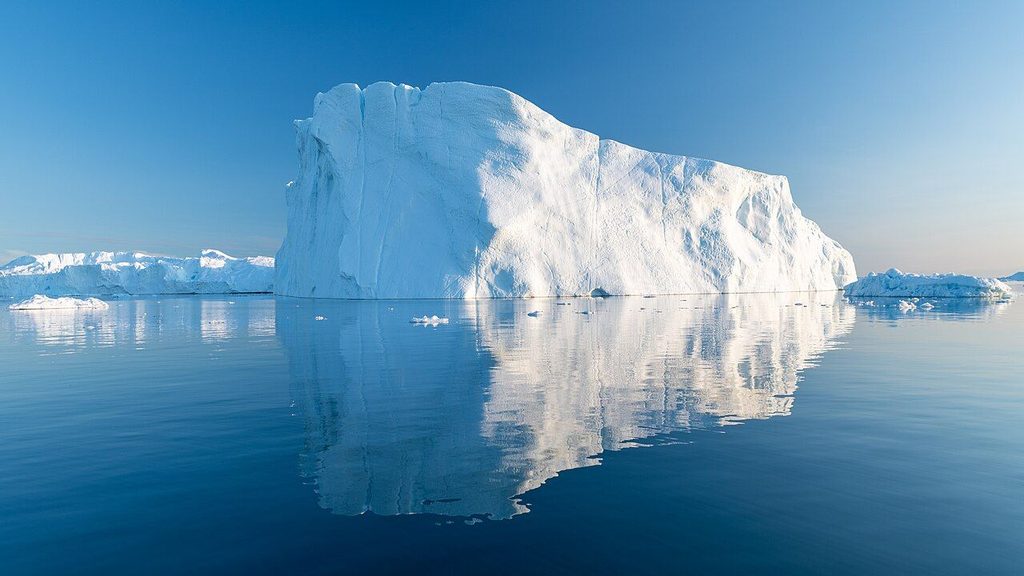
Icebergs grounded at the fjord mouth
Near the mouth of the fjord the seabed rises to a shallow ridge left by the glacier in an earlier age. The largest icebergs, whose keels reach deep below the surface, run aground on this bank and can sit there for months or longer. They act like a dam. Smaller ice backs up behind them, and the fjord stays choked until storms, tides or melting break the larger bergs free. When one does float off, it joins the stream of ice heading north and out into Disko Bay, where it may drift for a long time before it finally melts.
This is why the view from the shore changes every day and yet always looks full. Some icebergs roll over as they melt unevenly, showing smooth blue undersides polished by seawater. Others split with a crack you hear across the water. Stay well back from the shoreline when large pieces are moving: a collapsing or rolling berg can send a wave up onto the rocks with little warning.
A UNESCO World Heritage Site
The Ilulissat Icefjord was listed as a UNESCO World Heritage Site in 2004. The listing covers the fjord and the land around it and recognises both its scenery and its scientific value: the glacier and its icebergs have been studied for more than a century and a half, and they helped shape early understanding of ice ages and ice sheets. The protected area also takes in the old settlement at Sermermiut, where people lived on and off for thousands of years, drawn by the rich hunting at the edge of the ice. The Sermermiut valley walk is the easiest way to reach it.
The rules are simple and sensible. Keep to the marked paths and the boardwalk, leave stones, bones and old turf walls exactly where they are, and take all your rubbish back to town. Drones, camping and other activities may be restricted inside the protected area, so check the current rules before you go.
The boardwalk and the icefjord centre
From the southern edge of town a wooden boardwalk leads across the low, boggy ground towards the fjord. It protects the fragile tundra and makes the walk easy in summer shoes, though snow can lie on it well into spring. At the start of the boardwalk stands the icefjord centre, a modern building whose long, low shape bends with the land. Inside, an exhibition explains the glacier, the ice sheet and the people who have lived beside the fjord.
Opening hours, entry rules and any charges vary with the season, so check before you go. Even if the building is closed, the boardwalk and the marked trails stay open to walkers in good weather, and the view at the end of them is the same.
Seeing the icefjord by boat and from the air
Boats leave Ilulissat harbour in the warmer months to cruise along the outer edge of the iceberg bank at the fjord mouth. They cannot enter the packed ice, but they get close enough to show the scale of the bergs from water level, which the shore cannot. Evening sailings in high summer are popular for the low, warm light of the midnight sun. Sailing times and seasons depend on the weather and the ice; check before you go.
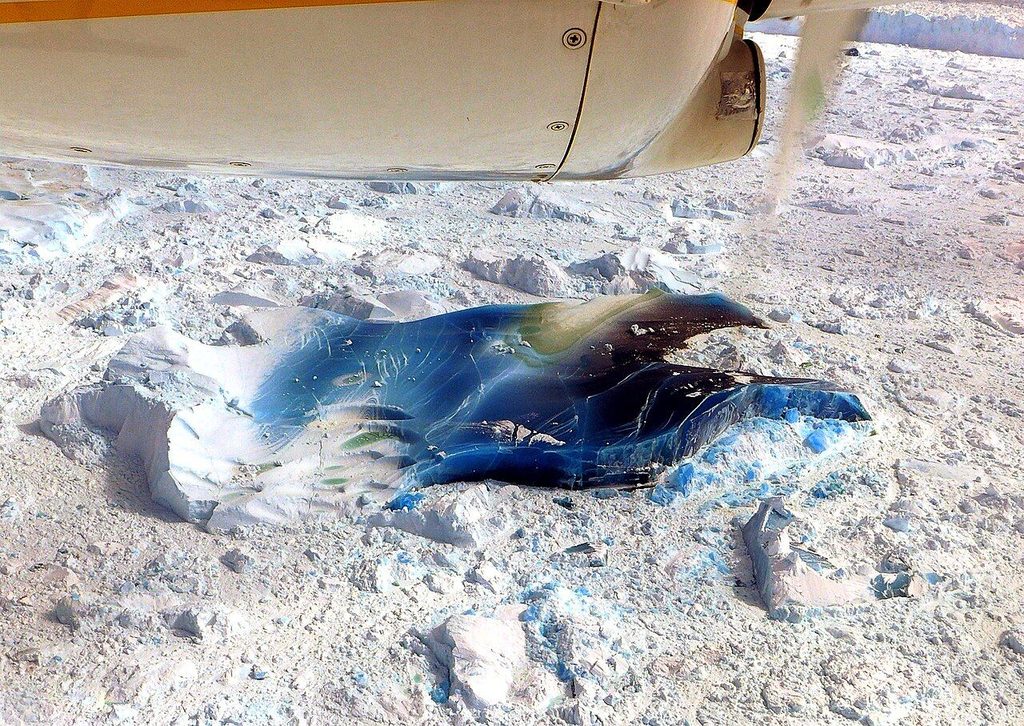
Small aircraft and helicopters also fly sightseeing routes over the fjord and towards the glacier front when conditions allow. From above, the fjord looks less like water and more like a white plain cracked into a million pieces. Further north, a longer boat trip takes you to a glacier whose front you can actually watch: our guide to Eqi, the calving glacier covers that day out. And out in the open bay, the same icebergs drift past feeding humpbacks, as our page on whales among the icebergs describes.
Practical notes for the fjord
- The walk from the centre of town to the boardwalk is short, and most visitors simply walk. Taxis are available if you need one.
- Weather changes fast. A clear morning can turn to fog and cold wind within an hour, so carry an extra layer even in July.
- The rocks near the water are slippery, and the shore is not a beach. Do not climb onto ice of any kind.
- In winter the fjord freezes between the bergs, and the low sun lights the ice pink and gold for a few hours around noon. Paths may be snowed over, so ask locally about conditions.
- Mosquitoes and small flies can be thick on still summer days. A head net weighs nothing.
Leave time to sit. The icefjord is not a sight you tick off in ten minutes. Its sounds, its slow movement and its changing light reward an hour or two on a rock above the water, and the town of Ilulissat is only a short walk away when you get cold.