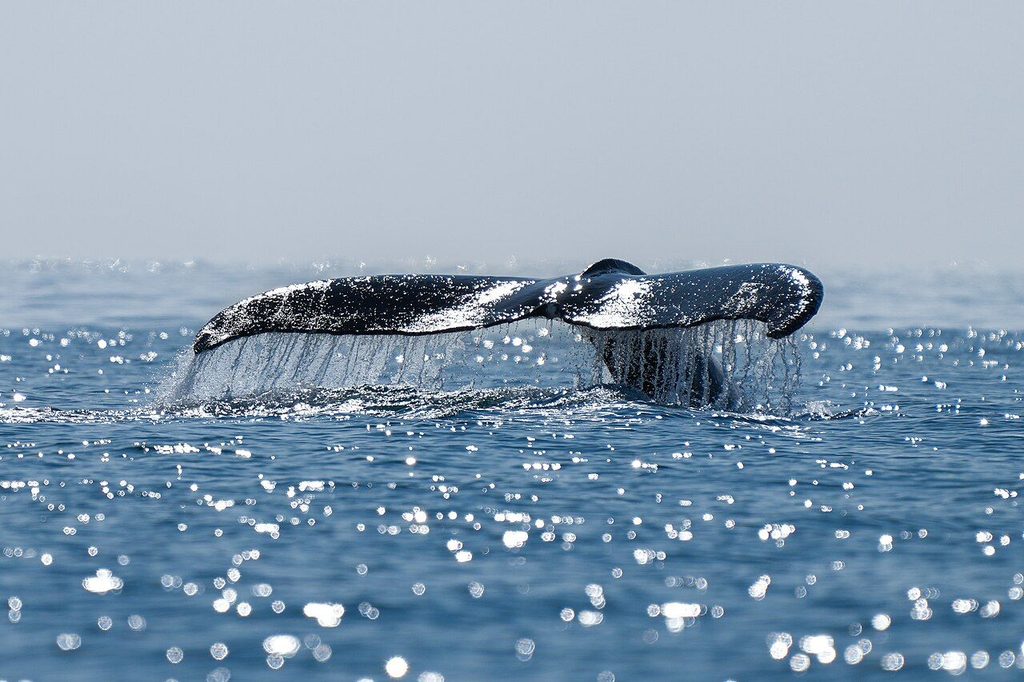
In summer, humpback whales feed in the same cold water as the icebergs from Ilulissat. On a calm evening you may see both, lit by a sun that barely sets.
| Daylight | Midnight sun from late May to late July; darkening evenings from late August. |
|---|---|
| Best months | June to September |
| Getting there | Boat trips from Ilulissat harbour |
| Bring | Warm layers, hat, gloves, binoculars, seasickness remedy |
Disko Bay is a broad bay on the west coast of Greenland, open to Baffin Bay in the west and lined with towns and settlements along its shores. Disko Island, the largest island on this coast, lies along its north-western side. Into this bay drift the icebergs of the Ilulissat Icefjord, and every summer whales arrive to feed in its cold, rich water. Few places let you see whales and great icebergs together so easily, and from Ilulissat you can be among them within minutes of leaving the harbour.
Why whales come to Disko Bay
Cold Arctic water holds a lot of oxygen and nutrients, and in summer, when the sea ice has gone and the sun is up around the clock, it fills with plankton, krill and small fish. Whales come north to feed on this short-lived abundance. The mixing of water near melting glaciers and icebergs may add to the richness in some places, though how much is still a subject of study.
The bay also offers depth close to shore and shelter from the open ocean, so feeding whales are often found within sight of land. That is what makes Disko Bay one of the most rewarding places in Greenland to look for them.
Humpbacks in summer
Humpback whales are the species most visitors hope for, and the one most often seen. They arrive in Disko Bay in early summer after migrating from warmer waters far to the south, where they breed in winter, and they stay to feed through the summer and into early autumn. Each one is a long, dark whale with very long pale flippers and a habit of lifting its tail into the air before a deep dive.
The underside of the tail, the fluke, carries a pattern of black and white marks that is unique to each animal, and researchers use photographs of flukes to identify individuals across years and oceans. If you take a clear picture of a fluke, you have photographed something like a fingerprint. Humpbacks may also breach, lifting most of their body out of the water, or slap the surface with a flipper, though most of the time you see a slow rhythm of blows, rolling backs and a final raised tail.
Fin, minke and other whales
Humpbacks are not alone. Fin whales, the second-largest animals on earth after the blue whale, also feed in the area, though they tend to stay further from shore and move fast, showing little more than a tall blow and a long grey back. Minke whales, much smaller and quicker, surface briefly and are easy to miss. In spring, before the main summer season, bowhead whales gather in parts of Disko Bay, especially near Disko Island, though they are rarely part of a summer trip from Ilulissat.
Seals rest on floating ice, and seabirds such as fulmars, gulls and auks work the water. Bring binoculars and keep looking; a calm sea makes everything easier to spot.
Midnight-sun evenings on the water
From late May to late July the sun does not set at Ilulissat. Evening boat trips in this season are a particular pleasure. The light falls low and warm across the water, the icebergs turn gold and pink on one side and blue on the other, and the sea is often at its calmest. Whales feed at any hour, so an evening sailing has as good a chance as a morning one, and the quiet makes it easier to hear a blow across the water.
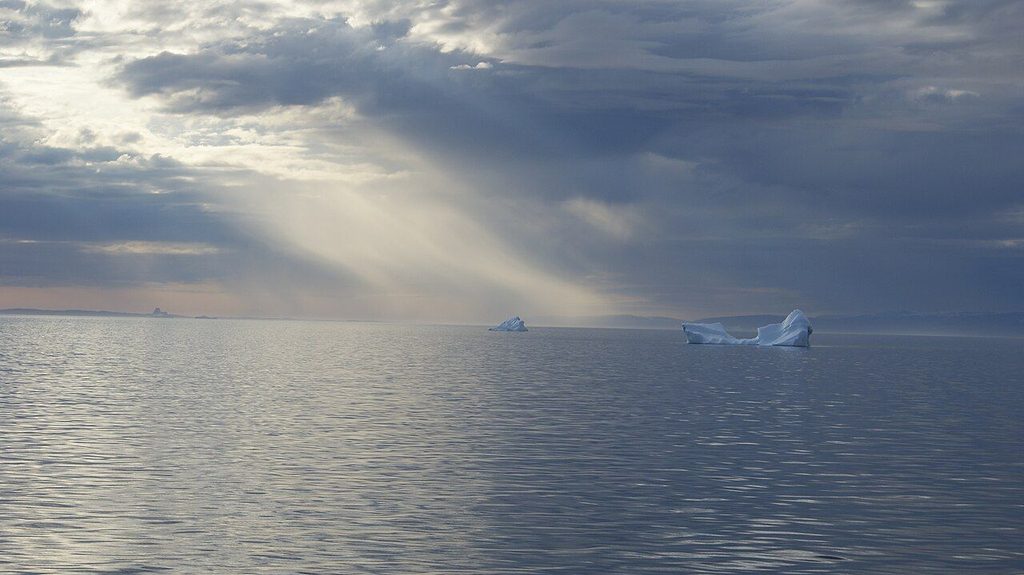
Later in the summer the nights darken again, and by late August the evenings close in quickly. Trips continue while the whales stay and the weather allows, but the season and timetable vary year to year, so check before you go. On some days, whales feed close to shore, and you can watch them from high ground near town, such as the rocks around Zion's Church; see our guide to Ilulissat for the town itself.
Watching whales well
Responsible boats slow down well before they reach whales, approach from the side rather than head on, and never chase or cut across an animal's path. They keep a sensible distance and limit how long they stay with one group. If you are choosing between trips, ask how they approach whales. The same care applies around icebergs: a good skipper keeps clear of large bergs that may roll or break, for the same reasons boats keep their distance at the calving front at Eqi.
Patience matters more than luck. Whales spend most of their time under water, and long gaps between sightings are normal. Watch for the blow, a bushy puff of spray that hangs in the air for a moment, then look just ahead of it for the back.
Cold-water safety
The water in Disko Bay stays close to freezing even in summer. A fall overboard is a serious emergency: cold shock can make it hard to breathe or swim within the first minute. Boats should carry flotation suits or life jackets for every passenger, and you should wear what the crew gives you and keep it fastened.
- Hold on when moving around the deck, and keep one hand for the boat.
- Dress in layers, with a windproof and waterproof outer shell, hat and gloves.
- Take a seasickness remedy before you sail if you are prone to it.
- Protect cameras from spray, and keep spare batteries warm.
- Follow every instruction from the crew without argument.
A whale trip in Disko Bay is rarely only about whales. The icebergs, the light and the silence of the open bay are part of it, and on a still evening they may stay with you longer than any single sighting. For the icebergs' origin, start with the Ilulissat Icefjord.