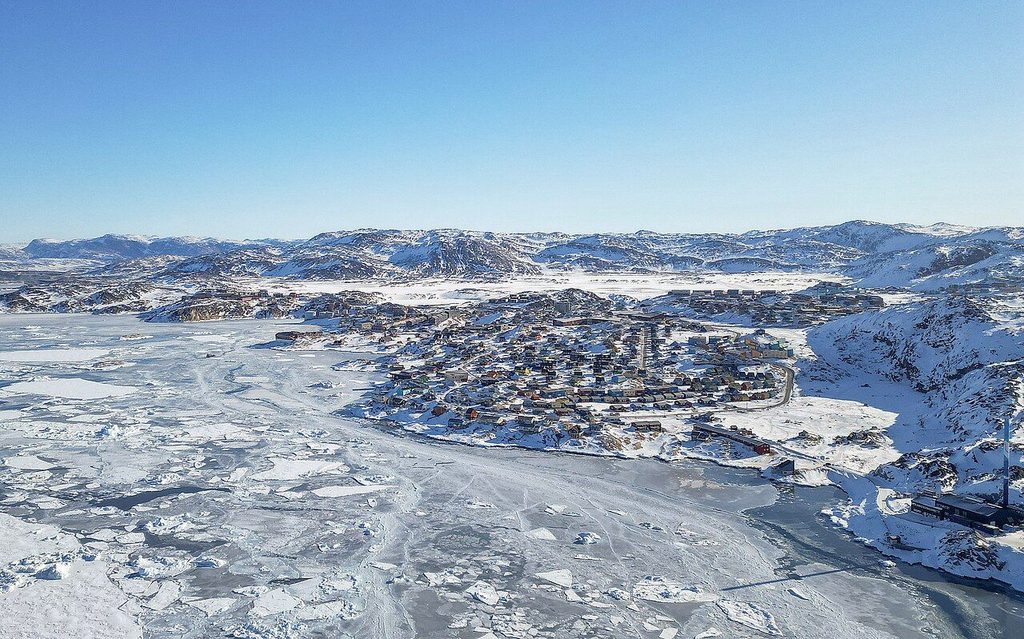
Coloured wooden houses on bare rock, a harbour full of fishing boats, and icebergs drifting past the end of the street. Ilulissat is small, steep and easy to walk.
| Daylight | Midnight sun from late May to late July; no sunrise for weeks around midwinter. |
|---|---|
| Best months | June to August, March, April |
| Getting there | Domestic flights or the coastal ferry |
| Bring | Warm layers, good shoes, sunglasses, a small daypack |
Ilulissat sits on the west coast of Greenland, roughly three hundred kilometres north of the Arctic Circle, on the shore of Disko Bay. It is one of the largest towns in the country, though still small by any other measure: a few thousand people, a harbour, a handful of streets and houses scattered over bare granite. Its name means icebergs in Greenlandic, and it earns it. The Ilulissat Icefjord opens just south of town, and icebergs from it drift past the houses all year.
A town of coloured wooden houses
Most buildings in Ilulissat are wooden, painted red, blue, green or yellow, and set on rock rather than in neat rows. The colours are often said to have once marked what a building was used for, and they help you find your way in snow or fog. Roads curve around outcrops and climb steep slopes, and many houses are reached by wooden stairs. The town is compact enough to cross on foot in half an hour, though the hills make it feel further.
The town was founded as a Danish trading post in the eighteenth century and was long known by its Danish name, Jakobshavn. You still see that name on maps and in the glacier's other name, Jakobshavn Isbræ. Today Ilulissat is a centre for fishing and for visitors who come to see the ice.
The harbour
The harbour is the working heart of Ilulissat. In summer it is crowded with fishing boats, small open boats used for hunting and getting between settlements, and larger vessels for the coast. Shrimp and halibut fishing have long driven the local economy, and you see the catch landed and the boats repaired along the quays. Look for small icebergs nudging at the harbour mouth on days when the wind blows in from the bay.
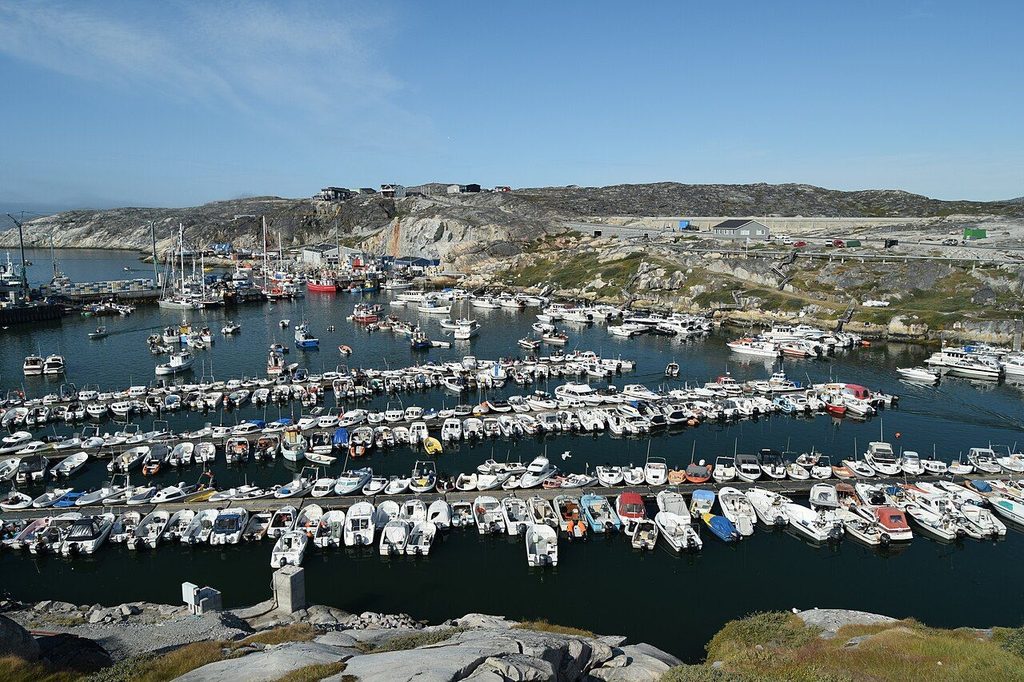
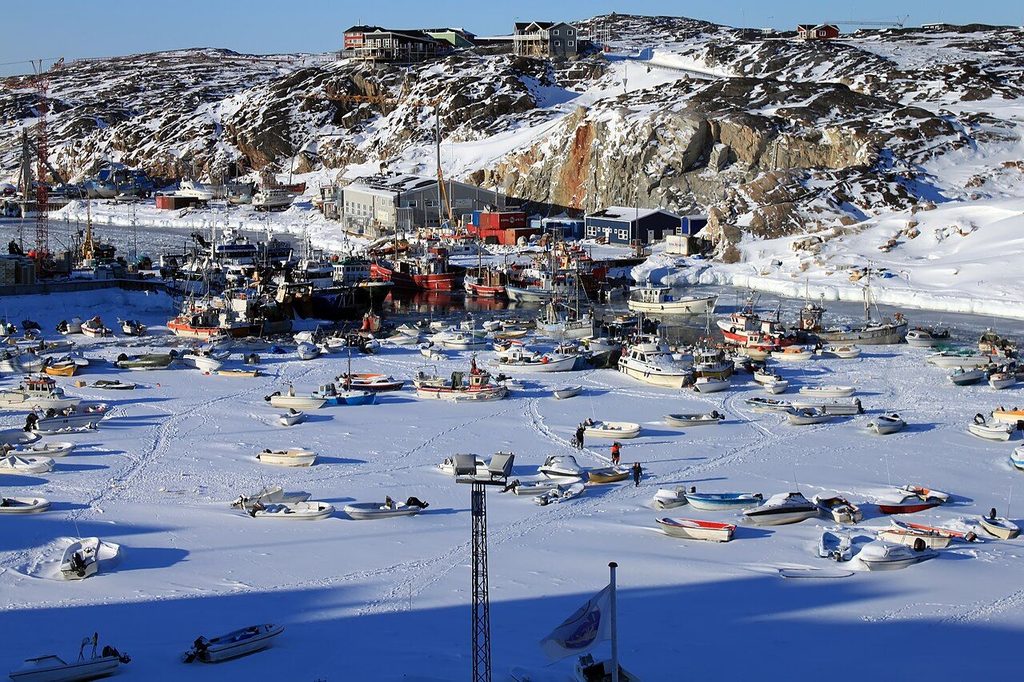
In winter and spring the harbour may freeze, and boats are pulled up onto the ice and the shore, standing in rows under the snow. Walking around the harbour edge gives a good sense of how the town lives with the sea in every season. Keep clear of working areas, cranes and moving vehicles, and stay off sea ice unless you know it is safe.
Zion's Church
Zion's Church, or Zions Kirke, stands near the shore at the edge of the old part of town, facing Disko Bay. Built in the late eighteenth century, it is one of the oldest buildings in Ilulissat and among the oldest churches in Greenland. Its simple wooden shape, dark against the snow or the summer sea, is one of the most recognisable sights in town, with icebergs often floating in the bay behind it.
→ Sled dogs and the Greenland winter
The church is still in use. If you go inside, do so quietly and respect any service taking place. Opening times shift with the season, so confirm them locally first. The rocks around it are a good spot to watch the bay, especially in the long evening light of summer.
Knud Rasmussen's birthplace
Knud Rasmussen, the polar explorer and ethnographer, was born in Ilulissat in 1879, the son of a Danish priest and a mother of Greenlandic descent. He grew up speaking Greenlandic, travelled by dog sled, and later led expeditions across Arctic Canada and Greenland that recorded the stories and lives of Inuit peoples. He remains one of the best-known figures in Greenland's history.
Rasmussen also helped found the trading station at Thule in the far north of Greenland, which gave its name to his series of expeditions. His writing about Greenlandic and Inuit storytelling is still read today, and the town keeps his memory close.
His childhood home, the old parsonage, is now a museum. It covers his life and expeditions as well as the history of the town and the region, with photographs, tools and objects from daily life. Hours and entry arrangements change with the season, so check before you go. A visit fits easily into a morning and gives depth to everything else you see in town.
Sled dogs on the edge of town
Ilulissat lies inside Greenland's sled-dog district, and on the edges of town you find yards where working dogs are kept tied up on short chains, each with its own patch of ground. In summer they mostly rest, and the yards are quiet except at feeding time, when the howling carries far across the rocks. Puppies sometimes roam loose. Our guide to sled dogs and the Greenland winter explains the rules and the season.
These are working animals, not pets. Do not approach chained dogs, do not feed them, and do not walk between them. Ask an owner before taking close photographs.
Getting around and practical notes
Ilulissat has an airport with domestic flights from other parts of Greenland, and connections to the wider world run through larger airports elsewhere. A coastal passenger ship also links towns along the west coast in the warmer months. Routes and timetables change from year to year, so check before you go. In town you can walk almost everywhere, and taxis cover the rest.
- Pavements are few and roads are steep. Good shoes matter in every season.
- Prices for food and goods are high, since most things arrive by sea or air.
- Cards are widely accepted, but carry a little cash for small purchases.
- Ask before photographing people, and respect private homes and gardens.
The weather sets the pace of life here. In summer the town feels open and busy, with people out late in the long light and boats coming and going at all hours. In winter it turns inward and quiet, and the best days are the cold, clear ones of late winter, when the sun returns and the snow is bright.
Use the town as a base for everything else. The Sermermiut valley walk starts on its southern edge, and boats leave the harbour for the bay where whales feed among the icebergs in summer.