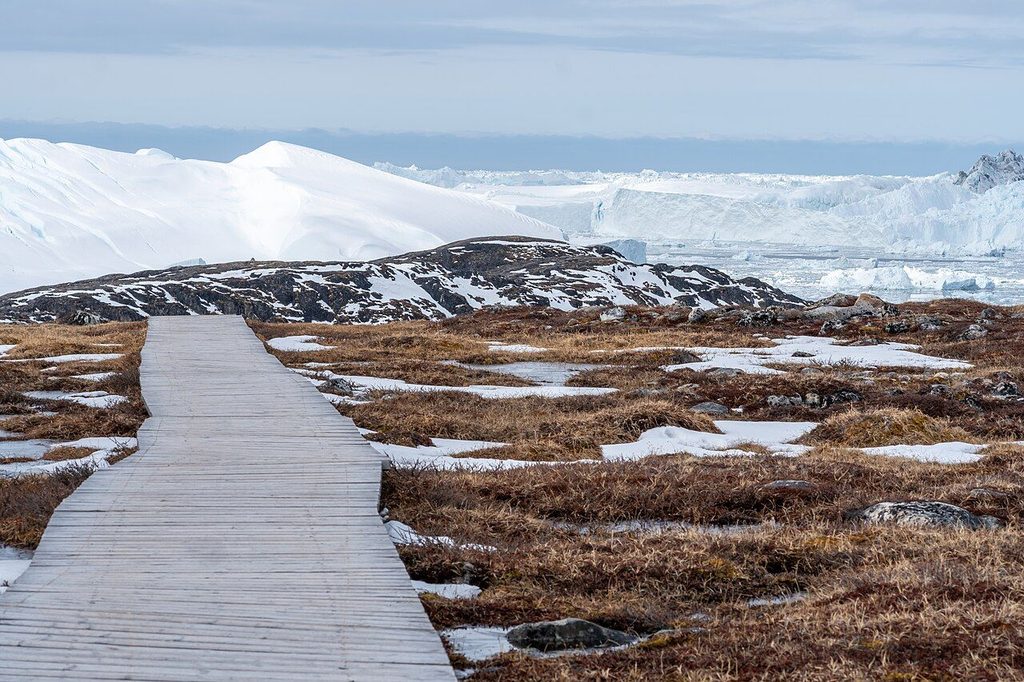
A short walk from town leads to a grassy valley where people lived for thousands of years, and to a rocky cliff above the icefjord.
| Daylight | Midnight sun from late May to late July; short, low-sun days in winter. |
|---|---|
| Best months | June to September |
| Getting there | Walk south from Ilulissat town centre |
| Bring | Sturdy shoes, warm layers, water, head net, rubbish bag |
Sermermiut is a small valley just south of Ilulissat, where green ground slopes down to the edge of the Ilulissat Icefjord. It looks empty now, a stretch of grass and rock with a few low mounds. For thousands of years, though, it was one of the busiest places on this coast. People came here because of the ice and the animals it brought. Today a boardwalk and marked trails lead you there in under an hour, and the walk joins old history with one of the best views of the fjord.
Getting to the start of the trail
The walk begins on the southern edge of Ilulissat, near the icefjord centre. From there a wooden boardwalk crosses the wet, low ground of the valley towards the fjord. The boardwalk protects the plants and the buried remains below them, and it makes the first part of the walk easy for almost anyone. It also lets you walk in ordinary shoes in summer, though proper footwear is better once you step off onto rock.
Most people walk out from town, which takes little time. Snow can lie on the boardwalk well into late spring, and in winter it may be buried completely, so ask locally about conditions before you set out in the colder months.
An old settlement at the edge of the ice
Sermermiut is one of the most important archaeological sites in Greenland. People lived here, on and off, for around four thousand years. Excavations have found layers of remains from several cultures, one above the other, each left by people who settled the valley in their own time.
The oldest layers belong to the Saqqaq culture, among the first people known to have lived in Greenland. Above them lie traces of the Dorset culture, which followed much later. The most recent layers come from the Thule people, the ancestors of today's Greenlanders, who arrived from the west and lived here into modern times. The settlement was finally abandoned in the nineteenth century, when its people moved elsewhere along the coast.
Why here? The answer is in front of you. The mouth of the icefjord and the bank of grounded icebergs keep stretches of water open and rich with life, and the hunting for seals and whales here was good. The valley also offers shelter, fresh water and level ground, all rare on this rocky coast.
What you can see on the ground
Do not expect ruins in the European sense. What survives are low turf walls, the faint outlines of houses, and mounds of old waste, called middens, built up over centuries. They are easy to miss and easy to damage. Information boards along the way explain what you are looking at, and the exhibition at the icefjord centre fills in the rest of the story, so it makes sense to see it before or after the walk.
The valley is part of the Ilulissat Icefjord World Heritage Site. Stay on the paths, never dig, and leave any stone, bone or fragment exactly where it lies. Taking anything from the site is forbidden, and even small disturbances add up when thousands of people walk this way each summer.
Kællingekløften, the cliff over the icefjord
At the end of the valley the land rises to a rocky point above the water. This is Kællingekløften, a cliff that drops steeply to the icefjord. A grim old story attaches to the name, about the hard choices of hungry winters, and it is best treated as legend rather than history. What is certain is the view. From the top you look straight across the fjord at icebergs packed together for kilometres, with Disko Bay opening out to the west.
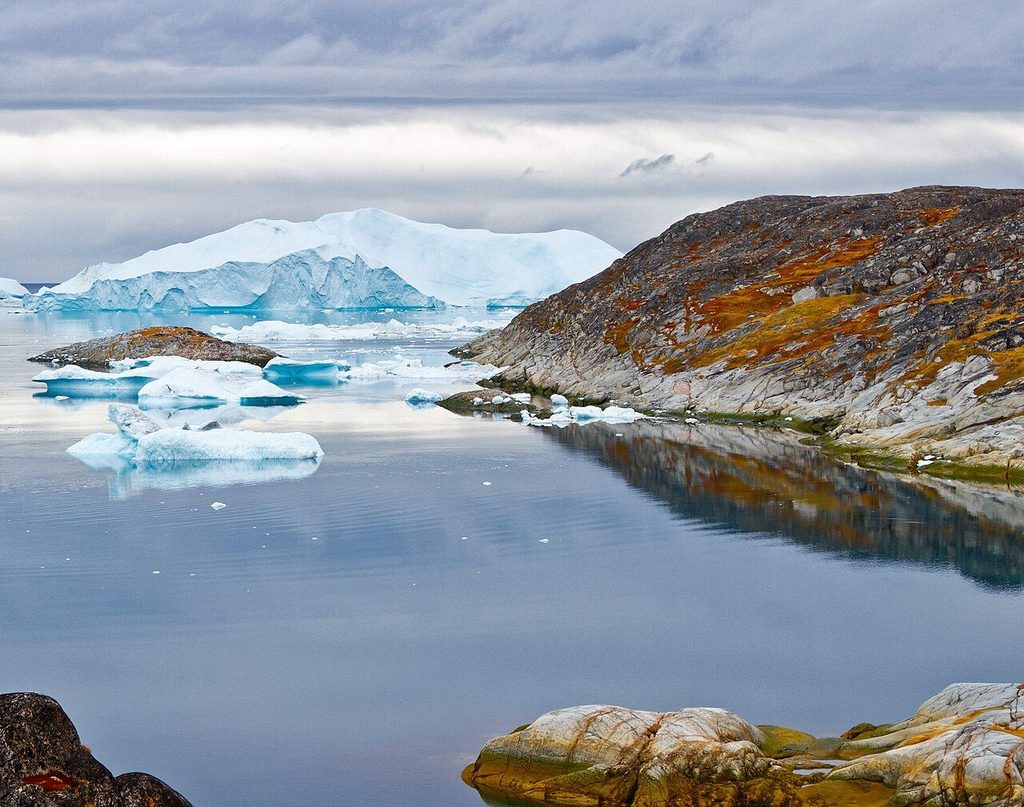
The cliff edge is unfenced. Keep well back, especially in wind, wet weather or snow, and keep children by the hand. Below the cliff the icebergs move, roll and break, and pieces falling into the fjord can push waves up onto the lower rocks. Do not climb down to the waterline.
The marked trails beyond the boardwalk
From the end of the boardwalk, several hiking routes marked with painted stones or posts head out across the rocks. They vary from short loops near the cliff to longer routes that follow the fjord inland and circle back towards town. Each route uses its own colour, and a map at the start shows them all. The longer walks cross uneven ground, wet hollows and bare slabs of rock, so allow plenty of time and turn back if fog rolls in.
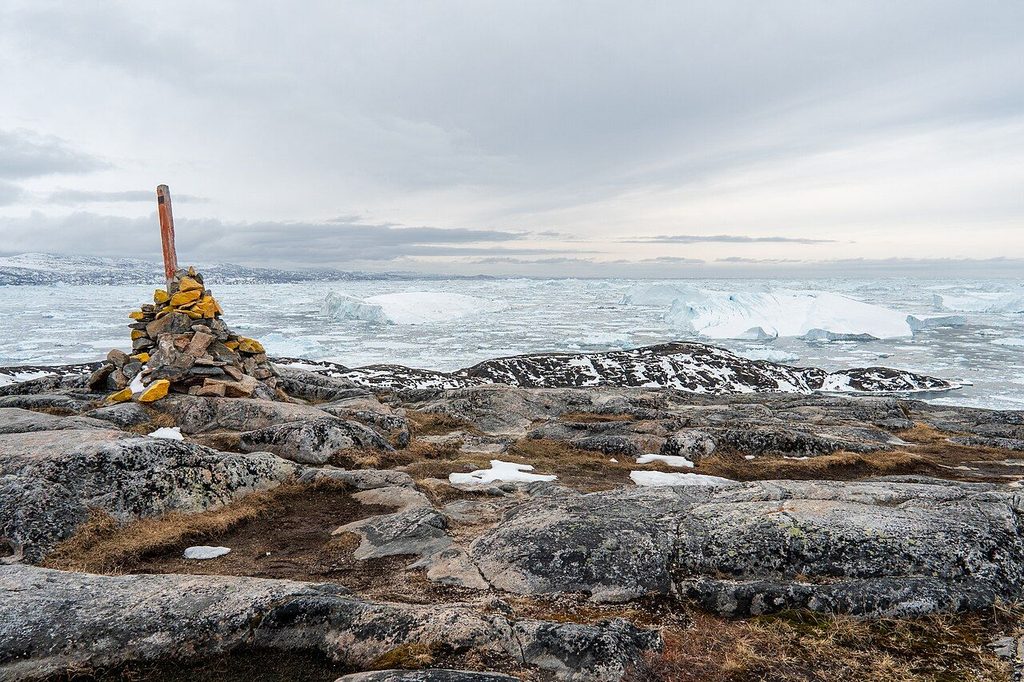
On the longer routes you will find rock cairns built to guide walkers in poor visibility. Follow them, but also follow common sense: there is no shelter out here and little mobile signal in places. Tell someone where you are going, carry water and an extra layer, and check the weather before you leave. Trail markings and routes can change, so check the current map at the start.
When to walk and what to bring
The best time for Sermermiut is from June to September, when the snow has gone and the ground is dry enough to enjoy. In high summer you can walk out late in the evening under the midnight sun, when the light turns warm and the paths are quiet. Early autumn adds red and gold to the low plants. In winter the valley is white and the trails are hard to follow, but the walk to the boardwalk can still be done on good days.
- Sturdy shoes with good grip for the rocks.
- A windproof jacket, hat and gloves, even in July.
- Water and a snack for the longer routes.
- A head net for flies on still days.
- A bag to carry out all your rubbish.
Combine the walk with a slow look at the town of Ilulissat afterwards, or with a boat trip to see the same icebergs from the water, as our guide to the Ilulissat Icefjord explains.