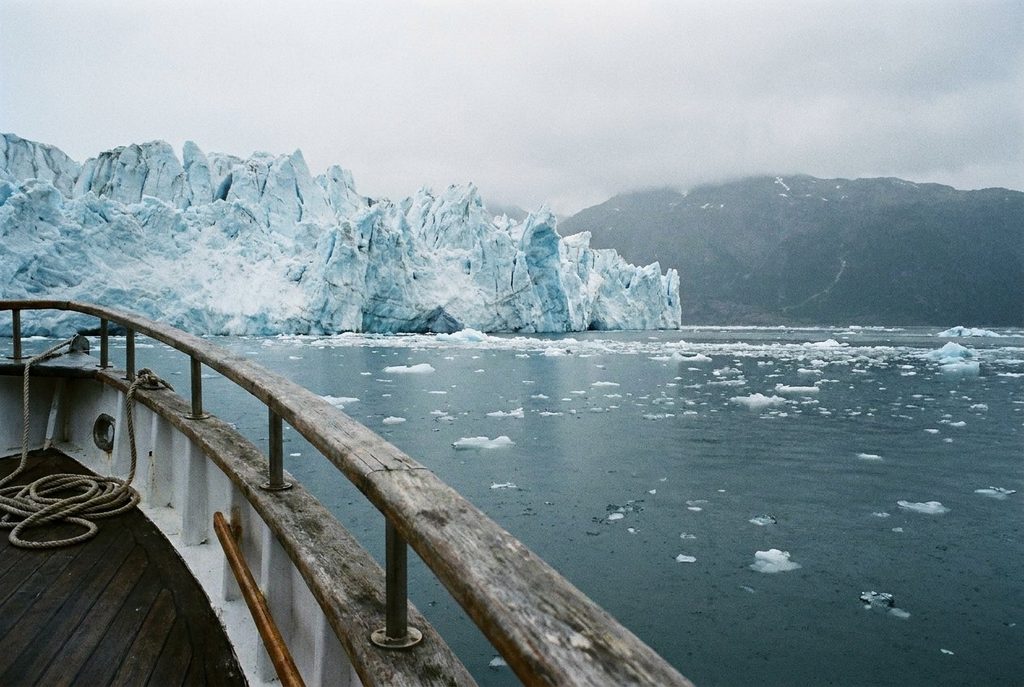
North of Ilulissat, a glacier ends in a wall of ice straight into the sea. A long day on the water takes you there, and the ice decides the rest.
| Daylight | Long light in summer: midnight sun until late July, then quick-shortening evenings. |
|---|---|
| Best months | Late June to early September |
| Getting there | Seasonal boat trip north from Ilulissat |
| Bring | Warm layers, waterproof jacket, hat, gloves, snacks, binoculars |
The icebergs of Ilulissat come from a glacier you cannot see from town. Eqip Sermia, usually called Eqi, is different. It lies north of Ilulissat along the coast of Disko Bay, and it ends directly in the sea in a long, high wall of ice. Boats can approach the front and wait in front of it while pieces break away. The trip takes most of a day, the weather can change the plan at any moment, and the reward is the chance to watch a tidewater glacier at work from the water.
Where Eqi is and how you get there
Eqip Sermia sits at the head of a bay on the mainland coast north of Ilulissat, inside the wider Disko Bay area. There is no road. In practice the only way most visitors reach it is by boat from Ilulissat on an organised day trip, run in the summer season when the sea is clear enough of winter ice. Some trips also land at a small spot near the glacier for a short walk, depending on the season and the operator.
The sailing takes several hours each way, so the whole outing usually fills a long day. Departures depend on weather and ice. Trips can be cancelled or shortened at short notice, and the season, the number of departures and the price all change from year to year. Check before you go, and build a spare day into your plans if Eqi matters to you.
The journey north along the coast
For much of the way the boat follows the rocky coast north, past low islands, empty bays and the occasional settlement. Icebergs from the Ilulissat Icefjord drift through this water, so the first hour often weaves between bergs of every size. Watch the sea as well as the ice. Disko Bay is a summer feeding ground for whales, and humpbacks are seen on many crossings, though never guaranteed; our page on whales among the icebergs has more on what you might see.
The ride is long and the open deck is cold, even on a sunny day. Wind off the ice sheet cuts through cotton in minutes. Dress as if for a winter walk, with a hat, gloves and a waterproof outer layer, and take turns between the deck and the cabin.
The calving front of Eqip Sermia
The front of Eqi is several kilometres wide and rises tens of metres above the water, a cliff of white and blue ice streaked with grey lines of rock dust. Behind it the glacier climbs back towards the inland ice. Because the front stands in the sea, the water undercuts it, and blocks of ice break away and fall. This is calving. Small pieces drop every few minutes on an active day. Larger collapses, where a whole section of the face slumps into the sea, are rarer and impossible to predict.
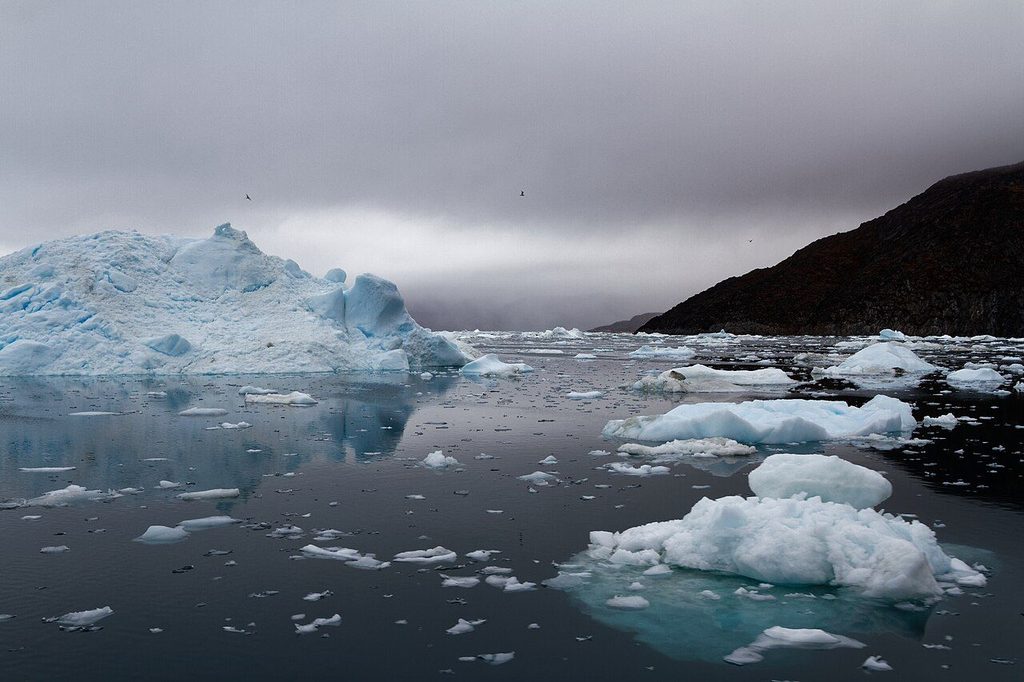
You usually hear the glacier before you see anything move. Deep cracks and booms carry across the water, sometimes followed by a slow fall, sometimes by nothing at all. The sound arrives a moment after the sight, because the front is further away than it looks. The scale is hard to judge without anything familiar to compare it with, and that is the first thing most visitors notice.
Keeping your distance from the ice wall
Calving is dangerous. When a large piece of ice falls into the sea it pushes up a wave that rolls outwards from the front, and close to the glacier that wave can be large enough to swamp or capsize a small boat. Falling ice also throws out sharp fragments, and icebergs nearby can roll without warning. For these reasons boats stop well back from the face and wait there, with the engine ready.
The safe distance depends on the size of the front, the state of the ice and the judgement of the skipper on the day. Follow every instruction from the crew, stay seated or hold on when asked, and never ask a boat to move closer for a better photograph. A long lens does that job far better than an engine.
- Do not lean over the rail when the boat is among ice.
- Keep children close and within reach on deck.
- Wear the flotation gear provided whenever the crew asks you to.
- If a large collapse begins, hold on and do as the crew says.
When to go and what the season brings
Sailings to Eqi generally run from early summer into early autumn, when the sea north of Ilulissat is clear of winter ice. Early in the season there may still be drift ice and snow on the hills. High summer brings long days under the midnight sun and the warmest weather, though warm here still means cool. Late in the season the light turns lower and softer, the evenings darken, and the first autumn storms can cut sailings short. The exact months shift with the ice each year, so check before you go.
The glacier itself changes too. Like many Greenland glaciers, Eqi's front has moved back over the past century, and the face you see now may look different from older pictures of it. That change is part of the reason so many people make the long trip.
A few practical points
- Eat a proper breakfast and bring food and a warm drink unless the trip says it provides them.
- Seasickness can be a problem in open water. Take any remedy before you board, not after.
- Bring binoculars for birds, seals and whales along the way.
- Protect cameras and phones from spray, and keep spare batteries warm in an inside pocket.
- Expect no mobile signal for long stretches of the trip.
Eqi is a full day and a long one, and it depends on the weather. If the boat cannot go, spend the day on land instead: the Sermermiut valley walk leads to the edge of the icefjord, and you can try Eqi again when the sea settles.